What Happens to Your Tree After It’s Removed in Wichita Falls?
Quick Answer
After your tree is removed in Wichita Falls, the wood and debris typically follow one of five paths: branches and smaller limbs are fed through an industrial wood chipper and become wood chip mulch that is either left on your property or hauled away by the crew; large trunk rounds are cut and staged for you to keep as firewood or removed with the rest of the debris; the stump is ground into wood chip material at or below grade; material the crew removes is hauled to the City of Wichita Falls Transfer Station on Rhea Road, the composting facility at 10984 Wiley Road, or processed through Waste Connections for regional green waste handling; and if the tree had a disease like hypoxylon canker or oak wilt, the wood is handled and disposed of separately to prevent spread. Whether you want to keep the wood, use the chips, or have everything hauled away is a conversation you should have with Texoma Tree Service before the job begins, not after the last section hits the ground.
Most Wichita Falls homeowners think about tree removal as a problem that ends when the tree comes down. The crew leaves, the space is clear, and life moves on. What actually happens in the hours between “the tree is down” and “the yard looks normal again” is a set of decisions about wood, debris, and disposal that most homeowners have never been asked to think through before.
That conversation matters because the answer is different for every property. A homeowner on the southwest side with a fire pit and a wood-burning insert might want every trunk round stacked and ready for the season. A family near Sikes Senter with a small lot and no storage space wants everything chipped and hauled before the crew leaves. A property manager dealing with a storm-damaged post oak in a commercial parking lot near Kemp Boulevard needs the site cleared completely and quickly so normal operations can resume.
This guide walks through every possible path a removed tree can take in Wichita Falls, who decides what happens, what local disposal options exist, which species produce the most valuable wood, and what you should tell your crew before they start so you end up with exactly the outcome you want.
What Does Tree Removal in Wichita Falls Actually Produce?
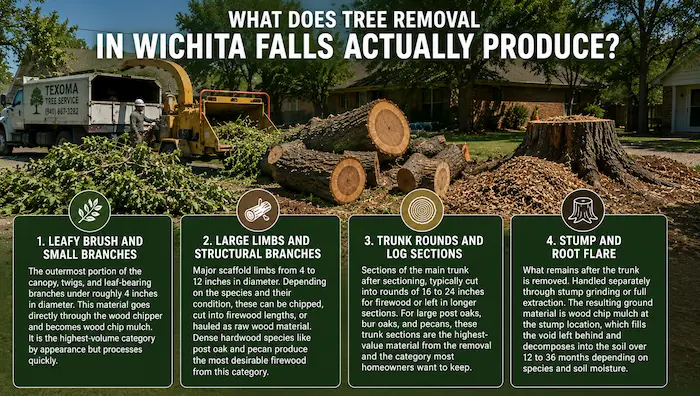
Before understanding what happens to your tree after removal, it helps to understand what a tree removal job actually creates. Most homeowners imagine a pile of branches and a log. The reality, especially for a large post oak or mature cedar elm, is considerably more material than that, spread across several distinct categories that each require different handling.
🌿
Leafy Brush and Small Branches
The outermost portion of the canopy, twigs, leaf-bearing branches under roughly four inches in diameter. This material goes directly through the wood chipper and becomes wood chip mulch. It is the highest-volume category by appearance but processes quickly.
🪵
Large Limbs and Structural Branches
Major scaffold limbs from four to twelve inches in diameter. Depending on the species and their condition, these can be chipped, cut into firewood lengths, or hauled as raw wood material. Dense hardwood species like post oak and pecan produce the most desirable firewood from this category.
🪝
Trunk Rounds and Log Sections
Sections of the main trunk after sectioning, typically cut into rounds of 16 to 24 inches for firewood or left in longer sections. For large post oaks, bur oaks, and pecans, these trunk sections are the highest-value material from the removal and the category most homeowners want to keep.
⚙️
Stump and Root Flare
What remains after the trunk is removed. Handled separately through stump grinding or full extraction. The resulting ground material is wood chip mulch at the stump location, which fills the void left behind and decomposes into the soil over 12 to 36 months depending on species and soil moisture.
Each of these categories requires a different decision from you as the homeowner, which is why the most important conversation to have with your Texoma Tree Service crew happens during the estimate walk-through, not the morning the chainsaw arrives. Once material has been run through the chipper or loaded onto the haul truck, reversing that decision is not possible.
What Happens to the Wood Chips? Can You Keep Them?
The wood chipper running outside your Wichita Falls home is processing branches and smaller limbs into wood chip fragments typically half an inch to two inches in size. These chips are blown into the truck bed or a collection tarp as they are produced. At the end of the job, the crew has one of two options: load the chips and haul them away, or leave them on your property.
Keeping the chips is almost always the right choice for Wichita Falls homeowners with any amount of landscaping. Fresh wood chip mulch from a just-removed tree is one of the most effective and locally available mulching materials you can put around the base of your remaining trees, shrubs, and garden beds. A three to four inch layer of wood chip mulch applied around the drip line of your remaining trees conserves soil moisture during the long, hot Wichita Falls summers, moderates soil temperature against the extreme heat that damages shallow root systems in Wichita County clay soil, and gradually improves soil structure as it decomposes.
How to use wood chip mulch from your removed tree in Wichita Falls
- Tree rings and drip zones: Apply a three to four inch layer of chips around the base of remaining trees, keeping chips at least six inches away from the trunk to prevent bark decay and pest attraction at the root flare
- Landscape beds and shrub borders: Fresh chips suppress weed germination effectively, lock in moisture during June through September heat, and break down slowly enough to provide 12 to 18 months of useful mulch life before needing replenishment
- Pathway and foot traffic areas: A four to six inch chip layer in garden paths and between raised beds creates a permeable, attractive walking surface that compresses gradually under foot traffic without becoming compacted in the way that Wichita County clay soil does
- Under established trees near structures: Mulching the root zone of trees close to your foundation protects soil moisture and reduces the soil shrink-swell cycle that Wichita Falls clay soil undergoes through wet and dry seasons, which in turn reduces lateral pressure on your foundation from soil movement
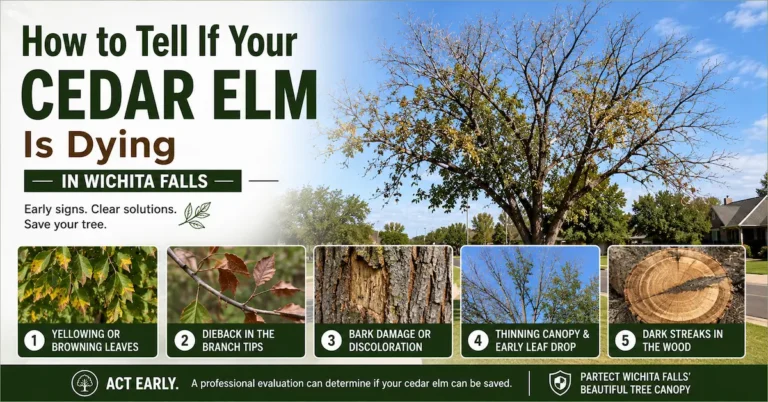
One exception to keeping chips from diseased trees: If the tree that was removed was showing signs of hypoxylon canker, Armillaria root rot, or active fungal bracket growth, do not mulch with chips from that tree around the base of your healthy remaining trees. The fungal spores present in the wood material can potentially transfer to living root tissue in close contact with the chips. In this situation, ask the crew to haul the chips away or compost them separately from your landscape beds.
Can You Keep the Firewood? Which Wichita Falls Tree Species Are Worth Keeping?
This is one of the most common questions Wichita Falls homeowners ask during tree removal, and the answer is almost always yes, you can keep the wood. However, whether keeping it is actually worth the effort depends heavily on two factors: what species the tree was, and whether you have a practical use for firewood on your property.
Not all tree species produce equally valuable firewood. In Wichita Falls, the most common removals involve post oak, cedar elm, pecan, hackberry, honey mesquite, and eastern redcedar. These species differ significantly in heat output, seasoning time, and ease of splitting.
| Species | Firewood Quality | Seasoning Time | Worth Keeping? | Special Notes |
|---|---|---|---|---|
| Post Oak | Excellent | 12 to 18 months | Yes, highly | One of the best BTU-producing hardwoods in North Texas; burns hot and long; splits well when dry |
| Pecan | Excellent | 12 months | Yes, highly | Prized for smoking and cooking; commands premium value if sold; highly sought by local BBQ enthusiasts in the Texoma area |
| Honey Mesquite | Excellent | 6 to 12 months | Yes, highly | Extremely dense and hot-burning; the most commercially valuable firewood species removed in Wichita County; popular for smoking and outdoor cooking |
| Cedar Elm | Good | 12 months | Yes | Dense hardwood with good heat output; splits with more effort than oak; adequate for general firewood use |
| Hackberry | Fair | 6 to 9 months | Maybe | Lower BTU output than oak or pecan; seasons relatively quickly; fine for general outdoor fire use but not ideal for primary heat |
| Eastern Redcedar | Poor for indoor | 3 to 6 months | Outdoors only | Produces significant creosote when burned in enclosed fireplaces; creates a pleasant aromatic outdoor fire but should not be used in wood-burning inserts or enclosed fireplaces |
If you want to keep the firewood, tell your crew before removal begins so they cut trunk rounds to your preferred length, typically 16 to 18 inches for standard fireplace use, and stack them in your designated location rather than processing everything through the chipper or loading it onto the haul truck. Once the wood is chipped, that decision cannot be undone.
Keep in mind that freshly cut green wood from a just-removed tree is not ready to burn. Green wood contains 50 percent or more moisture by weight. Burning green wood produces significantly more smoke, less heat, and much more creosote buildup in your chimney or stovepipe than properly seasoned wood. Post oak and cedar elm removed in Wichita Falls need a minimum of 12 months of stacked, covered outdoor seasoning before they are ready to produce clean, efficient heat. Stack the rounds in a single row off the ground on a pallet or two-by-fours, cover the top loosely with a tarp, leave the sides open for air circulation, and wait.
Where Does Hauled Tree Material Go in Wichita Falls?
When you choose to have the crew haul everything away, or when material is too diseased or pest-infested to leave on your property, where does it actually go? This is an area where every competitor article fails Wichita Falls homeowners because every competing piece of content gives generic national disposal information with no local specificity whatsoever.
Wichita Falls Local Disposal Options for Removed Tree Material
Where tree material actually goes after removal in the Texoma area
Professional tree services operating in Wichita Falls use a combination of the following local disposal and processing channels, depending on the material type and condition:
- City of Wichita Falls Composting Facility: Located at 10984 Wiley Road, Wichita Falls, TX 76307. This municipal composting site accepts organic yard waste including tree material. Processed green waste from the facility is converted into compost that supports local landscaping and agricultural use across the Texoma region.
- City of Wichita Falls Transfer Station: Located off Rhea Road. Open Monday through Friday from 8:00 a.m. to 6:00 p.m. and Saturday from 10:00 a.m. to 4:00 p.m. The transfer station accepts tree branches and woody debris and routes material to appropriate downstream processing or disposal facilities. Contact the station at (940) 691-7631 to confirm current acceptance policies.
- Waste Connections Regional Processing: The regional material recovery facility serving the Wichita Falls area operates under Waste Connections and accepts tree branches over six inches in diameter at the landfill. Standard yard waste is kept separate for green waste recycling rather than general landfill disposal.
- City Curbside Organics Collection: The City of Wichita Falls provides curbside commercial dumpster organics collection for properties with the appropriate service tier. Residential curbside pickup of bundled brush is available on scheduled collection days, but large tree debris volumes from a full removal exceed curbside limits and require haul-off by the tree service crew or a private debris removal company.
Material from trees removed due to active disease or significant pest infestation is typically hauled directly to the transfer station or landfill rather than the composting facility, to prevent the spread of pathogens through finished compost that could be applied to healthy landscapes across the region.
What Happens to Wood From a Diseased Tree in Wichita Falls?
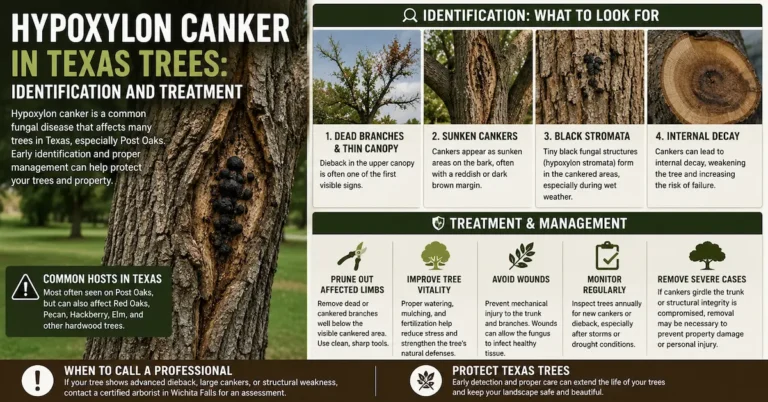
Not all removed trees in Wichita Falls are healthy specimens cleared for space or construction. A meaningful percentage of removals involve trees that died from or are actively infected with fungal diseases common to North Texas, including hypoxylon canker, Armillaria root rot, and oak wilt. The disposition of wood from these trees requires more care than standard removal material.
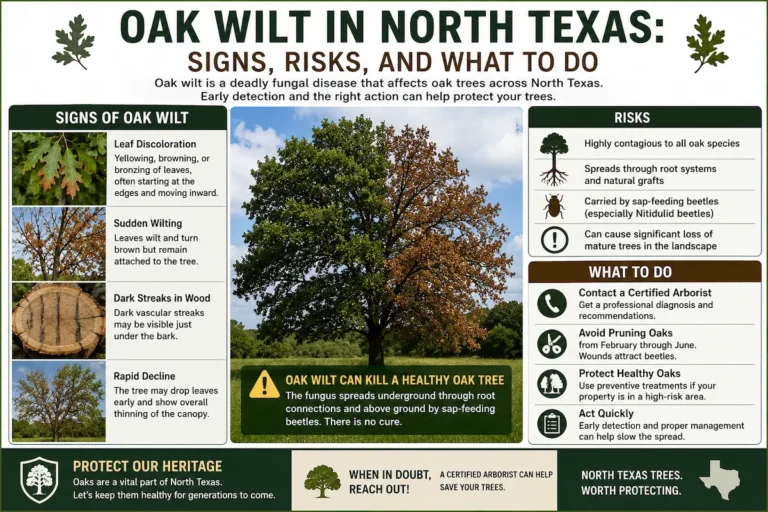
Oak wilt in particular demands careful handling. This vascular wilt disease, caused by the fungal pathogen Ceratocystis fagacearum, spreads through two primary routes in North Texas: root-to-root contact between adjacent oak trees and through sap-feeding nitidulid beetles that are attracted to fresh wounds and oak wilt-infected wood. The Texas A&M Forest Service recommends that wood from oak wilt-infected trees in Wichita Falls and across the Texoma region be either burned promptly, buried, or covered tightly with a clear plastic tarp sealed at the edges with soil to prevent access by sap beetles. Wood from a confirmed oak wilt tree should not be transported to other locations where it could introduce the disease to new oak populations.
Do not do this with wood from a diseased Wichita Falls tree
- Do not mulch and spread chips from an oak wilt-infected tree around the base of other oaks on your property or on neighboring properties. Spore-carrying material in direct contact with root tissue creates a transmission pathway.
- Do not transport unseasoned firewood from a diseased tree to other properties or to campgrounds. Texas participates in the statewide “Don’t Move Firewood” advisory, and moving oak wilt-infected wood is one of the primary ways the disease spreads to previously unaffected areas.
- Do not stockpile wood from a hypoxylon canker-infected tree near living trees on your property. Although hypoxylon does not spread the same way oak wilt does, the decaying wood harbors bark beetle populations that will migrate to healthy, stressed trees nearby once the primary wood source is depleted.
An ISA Certified Arborist who assesses the tree before removal should identify disease status and advise you on appropriate post-removal material handling as part of the service scope. At Texoma Tree Service, disease identification and appropriate disposal recommendations are part of the removal consultation, not an afterthought.
What Happens to the Stump After Your Tree Is Removed?
The stump is the part of the removed tree that most Wichita Falls homeowners forget to plan for until it is sitting in their yard. Unlike the rest of the tree, which the crew processes and either leaves or takes, the stump requires its own separate decision and in most cases its own separate equipment and scheduling.
The two standard options are stump grinding and full stump removal. Stump grinding is by far the most common choice in Wichita Falls, using a rotary grinding head to reduce the stump to eight to twelve inches below grade and filling the void with wood chip material that decomposes in place. Full stump removal excavates the stump and primary root ball entirely, leaving a clean void suitable for construction or immediate replanting.
What remains after stump grinding is a depression filled with wood chip fragments mixed with soil. Over the following 12 to 36 months this material breaks down, the depression settles slightly, and the area can be seeded, sodded, or planted over as the root system decomposes into the surrounding Wichita County clay soil. For honey mesquite and hackberry stumps specifically, grinding below the dormant bud zone and applying a stump treatment at the time of removal prevents the aggressive resprouting that both species are known for in North Texas conditions.
Our stump grinding and removal service handles both options for Wichita Falls properties and schedules stump work concurrent with tree removal when requested, reducing the total number of crew visits and the combined mobilization cost for your project.
What Happens to Your Yard After Tree Removal in Wichita Falls?
Once the tree is down, the stump is handled, and the debris is processed or hauled, most Wichita Falls homeowners are left with a cleared space that does not yet look like the clean finished yard they imagined. Understanding what to expect from the site in the days and weeks after removal helps manage expectations and plan the restoration work sensibly.
- Wood chip layer in the stump zone. If stump grinding was performed, a layer of wood chips occupies the former stump location. These chips will compact and settle over the following weeks. Add topsoil after two to four weeks, tamp level with surrounding grade, and reseed or sod. The wood chip material beneath is beneficial for soil biology and does not need to be excavated before topsoil addition for lawn restoration.
- Equipment marks and minor lawn disruption. Bucket truck outriggers, chipper positioning, and heavy foot traffic in the work zone will leave compressed grass and possibly tire ruts in the immediate area around the removal. In Wichita County clay soil these marks are most visible when the soil is moist. Regular watering over three to four weeks generally allows the lawn to recover without reseeding unless the soil was significantly disturbed.
- Soil void in the root zone. As the remaining root system decomposes over the following one to three years, you may notice minor ground settling in the area around the former tree base, particularly after heavy rains. This is normal and generally resolves without intervention for residential-scale trees. For large trees with extensive lateral root systems, more significant settling is possible and may warrant filling with topsoil after the first rainy season following removal.
- The cleared space and replanting decision. Once the site has settled and you have confirmed that any disease condition has been appropriately addressed, the cleared space becomes an opportunity. For Wichita Falls homeowners wanting to replant, Texas red oak, desert willow, Texas mountain laurel, and Mexican plum are all locally appropriate species that establish well in Wichita County conditions and handle the region’s heat and drought cycles better than many commonly planted ornamental species.
For remaining trees on your property, scheduling a post-removal inspection through our tree trimming and pruning service helps identify any structural issues or early disease signs in trees that were growing adjacent to the removed specimen. Trees that shared root zone space with a diseased tree, or that were growing in the same drought-stressed soil conditions, may be showing early decline that is far easier to address proactively than reactively after the following storm season.
And if a new storm causes fresh damage before you have had time to address your remaining trees, our emergency tree removal service is available 24 hours a day across Wichita Falls, Burkburnett, Iowa Park, Henrietta, Electra, and the surrounding Texoma communities.
Frequently Asked Questions:
Will the tree service crew clean up everything, or will I be left with debris?
A professional tree removal crew from Texoma Tree Service leaves your property fully cleaned. All branches, trunk sections, and debris from the removal are processed on site through the chipper, hauled away, or staged as requested before the crew departs. The final walkthrough with you before departure is your opportunity to confirm the site meets expectations before the crew loads equipment and leaves. Any crew that routinely leaves property without completing cleanup should be evaluated carefully before you hire them for a second job.
Can I request that the crew leave the mulch chips on my property?
Yes, and this is generally the most practical choice for Wichita Falls homeowners with any amount of landscaping. Simply request this during the estimate conversation or confirm it on the morning of the job. The crew will deposit chips in your designated location rather than loading them into the truck. Specify where you want them staged so the pile does not end up in an inconvenient spot in your yard.
What if I want some of the wood as lumber rather than firewood?
For large, straight trunk sections from post oak, pecan, or bur oak, the wood has potential value as slabs for woodworking and furniture making. There are portable sawmill operators in the Texoma area who can mill slabs on site if you request it in advance and the trunk sections meet their size requirements. This is a niche use case and requires advance coordination, but it is a legitimate second life for high-quality hardwood that would otherwise become firewood or be chipped. Discuss this possibility during your estimate if you have a large specimen that warrants it.
How long does it take for a stump to fully decompose in Wichita Falls after removal?
In Wichita County clay soil, stumps that are ground but not fully removed typically take 18 to 36 months to decompose to the point where the surface area looks fully natural. Dense hardwood species like post oak and honey mesquite decompose more slowly than softer wood species. The decomposition rate is significantly affected by soil moisture. During Wichita Falls drought years the decomposition process slows markedly, while years with above-average rainfall accelerate it. Applying nitrogen-rich fertilizer to the chip layer in the stump zone can modestly accelerate decomposition by feeding the microorganisms responsible for breaking down the woody material.
Is it possible to replant a new tree immediately after removal in Wichita Falls?
Not in the same spot, at least not right away. The stump zone contains decaying root material and often residual disease pathogens if the removed tree died from root disease. Most arborists recommend waiting six to twelve months before replanting in the same soil zone, and selecting a different species than the one removed if the cause of death was species-specific disease. Planting two to three feet away from the old stump location and backfilling with amended soil gives a new tree a healthier start than planting directly into the disturbed stump zone.
Tree Removal in Wichita Falls? Know Your Options Before the Crew Arrives.
Texoma Tree Service handles complete tree removal, stump grinding, debris disposal, and post-removal consultation across Wichita Falls, Burkburnett, Iowa Park, Henrietta, Electra, and the Texoma region. Get your free on-site estimate today.
Call us: +1 940 223-7713